How to Integrate Hydraulic Press Automation Into Your Production Line
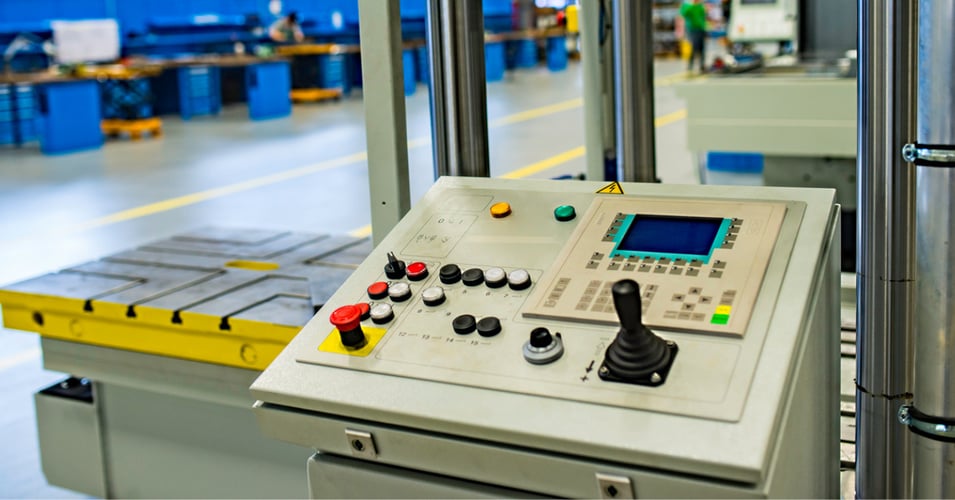
Table of Contents
How to Integrate Hydraulic Press Automation Into Your Production Line
Does your production process need to be streamlined? Are cycle times slow? Is there operator fatigue, or are safety risks too high?
You may dream of adding automation to your production, but feel it’s too expensive or complex. We’ve got good news: Hydraulic press automation doesn’t have to be all or nothing.
Want to take baby steps today? Start by learning the practical ways automation can be phased into your existing operation, help support long-term growth, and improve the work environment for your employees.
Common Types of Hydraulic Press Automation
Hydraulic press automation uses advanced technology (like robotics and PLC) to make loading, unloading, or pressing automatic during the production process. Adding any automation to your process contributes to improved safety, consistency, and overall productivity.
Automation can be completed on a spectrum, from semi-automated press operations all the way to fully integrated automation. It doesn’t mean the production runs itself with no humans involved. People still need to operate, supervise, and troubleshoot.
Automation allows for continuous, unattended operation, which helps improve cycle times. The most common types of automation include:
- Press machine automation: Uses advanced, integrated controls to manage speed and pressure to optimize the machine’s performance. The core of the automated press is the programmable logic controller (PLC), which manages precision in timing, pressure, and motion.
- Press transfer automation: Handles the movement of parts between multiple stations or different machines, such as pick and place units.
Robotic and stamping press automation: Transforming how products are made in manufacturing, robots have become common in stamping and forming to manage raw materials and finished parts. For instance, robotic arms are able to load and unload materials in and out of the press.
How Automation Is Integrated Into an Existing Press Line
There are two approaches when it comes to adding press shop automation: a phased integration or a full overhaul.
A phased approach is used for an existing line with strong ROI potential. The philosophy is to start by automating the easiest, highest-impact area, then expand to a full-scale integration as each upgrade is confidently established.
A full overhaul is much higher risk, with a much higher investment. Plus, it’s very disruptive in production. This approach is usually only considered when the existing machine is outdated or otherwise no longer viable. In most situations, including the strategies below, we recommend a phased strategy.
Keep these basic steps in mind as you begin the automation process:
- Evaluate the current press line and workflow
- Identify highest-impact opportunities
- Design around existing presses
- Integrate controls and safety features
1. Evaluate the current press line and workflow.
Before buying new equipment, determine bottlenecks and where opportunities for improvement exist.
Map out your current workflow – make note of where production gets stuck. Are there points of slow handoffs, too much manual handling, or unsafe steps? Also, check in with your operators who run the system every day. They have firsthand knowledge of the biggest pain points.
Once you figure out where upgrades will matter most, make sure your existing equipment and controls are able to connect with new automation equipment, like robots and feeders, or if upgrades are needed first.
2. Identify highest-impact opportunities.
Start with the automation upgrades that are the most cost-effective and will make an immediate difference. These will be the easiest pills to swallow if the changes cause temporary hiccups.
Examples of high-ROI automation include adding automated feeders or stacking systems, which load materials into the press. Another option is to add robots, index tables, or transfer systems that move parts between presses or stations.
Adding quick die change to your production is especially helpful when you run shorter batches or switch jobs often. Automated clamping and organized die storage make swapping dies much faster.
3. Design around existing presses.
Instead of replacing presses completely, add automation to your current machine. For example, robots can be added for loading and unloading; just make sure they fit the existing space and layout.
Incorporate automation modules – like conveyors, an index table, or an automatic feeder – that work with the current press without changing the core mechanics.
Upgrade the press’s controls if they are outdated. Electronics can be modernized to coordinate with newer automated equipment, such as feeders and safety systems.
4. Integrate controls and safety features.
Upgrade your system by adding press automation technology to better connect and coordinate the entire operation. This makes it easier to troubleshoot, track performance, and adjust processes.
Adding machine safety features, like light curtains and locked safety gates, is a major benefit for your workforce. These reduce the risk of needless accidents during production.
Signs Your Press Line Is Ready for Automation
When your hydraulic press needs manual intervention more often than not, it may be time to consider integrating automation. If you notice any of the following during operation, your production may benefit from automation.
- Manual loading and unloading create bottlenecks, causing the press to sit idle.
- Operators are exposed to repetitive strain and safety risks, leading to an unhappy workforce, ergonomics-related injuries, or even high turnover rates.
- Inconsistent part quality occurs more frequently because of manual positioning. Your production has high rates of scrap, rework, and defects.
- Difficulty scaling production without adding more employees. You have to turn down orders or struggle to meet demands, but adding more operators would be too costly or inefficient.
Automation cuts downtime, excessive waste, and inefficiencies that limit growth. Not only will you see an increase in machine use and overall productivity, but you’ll also lower labor expenses and other operating costs.
Choosing Automation That Fits Your Operation
Integrating automation into your production in phases rather than all at once makes it manageable. Remember, it’s not all or nothing. Hydraulic press automation can be customized to fit the exact needs of your operation, and create the greatest ROI possible. Suddenly, quality, consistency, repeatability, and safety improvements are all within your reach.
Explore how hydraulic press automation could fit into your production with solutions from Multipress.
.png?width=400&name=Hydraulic%20Safety%20Blog%20Image%20(1200x628).png)